
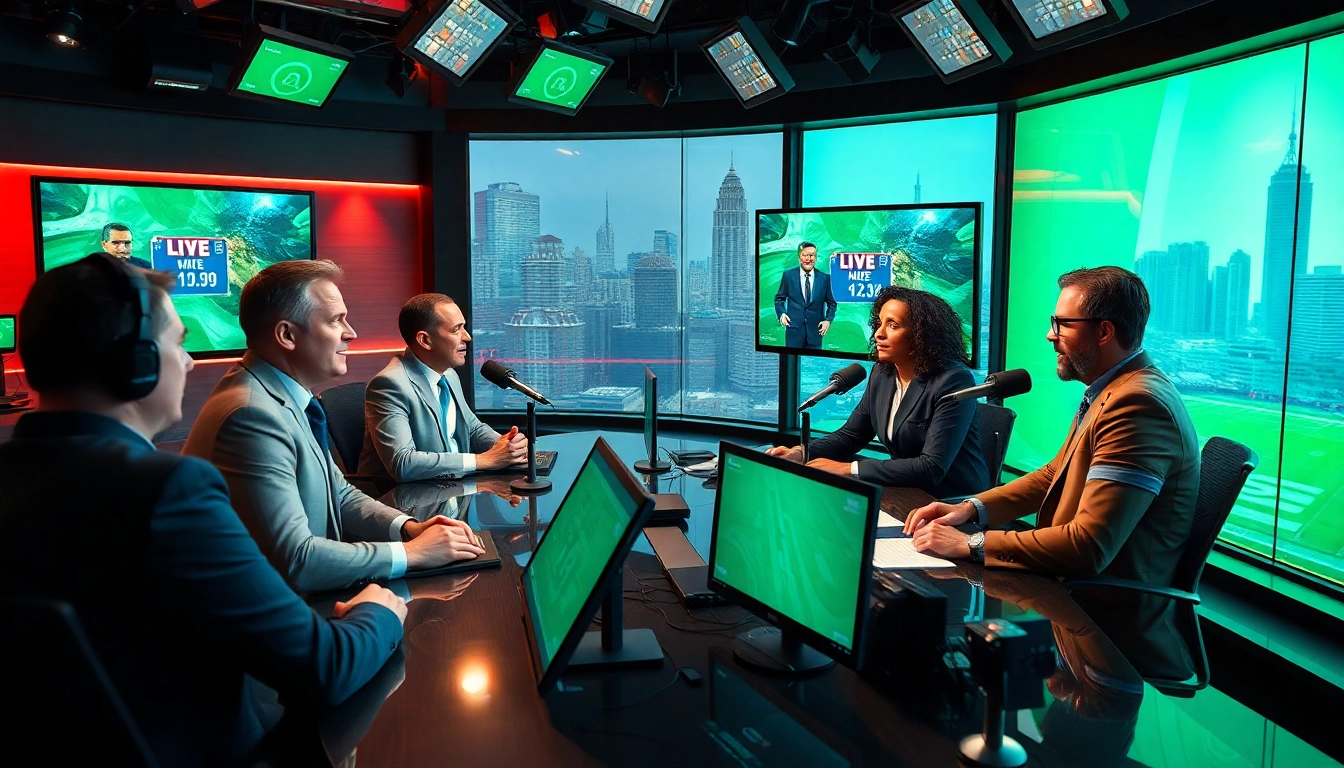
Understanding Sports Broadcasting
What is Sports Broadcasting?
Sports broadcasting is the dissemination of live or recorded sports events via various media platforms, including television, radio, and the internet. This essential practice enables fans worldwide to engage with their favorite teams and athletes, fueling the passion for sports culture. The format of sports broadcasting can range from detailed commentary and analysis to instant replays, live interviews, and audience interaction. A critical link in connecting audiences directly with sports events, sports broadcasting serves to inform, entertain, and create a shared experience amongst fans. You can explore more about Sports Broadcasting and its various forms.
The Evolution of Sports Broadcasting
The evolution of sports broadcasting is a tale of innovation and adaptation. Sports radio began in the early 20th century, offering fans real-time updates as they tuned in for play-by-play coverage. As technology advanced, television emerged as a dominant medium, bringing live visuals into homes and dramatically enhancing audience reach. The introduction of cable and satellite TV broadened sports coverage, allowing for specialized sports channels to emerge.
In recent years, the internet has revolutionized sports broadcasting through streaming services, social media platforms, and online sports networks. This shift allows for greater flexibility in viewing options, including mobile streaming and highlight reels, ensuring that fans have access to live games and sports content anytime and anywhere. Such technology advancements not only influence how sports are consumed but also how broadcasters adapt their strategies to attract and retain viewership.
Importance of Sports Broadcasting
Sports broadcasting plays a vital role in promoting athletic events and enhancing fan engagement. It serves as a primary source of information, providing updates on game scores, player statistics, and expert analysis that increase understanding of the sports landscape. Through in-depth programming and debate, broadcasters can foster community and discussion among fans, driving loyalty and viewership.
Additionally, sports broadcasting serves as a platform for sponsors and advertisers, allowing for valuable partnerships that fund athletic organizations and enhance the overall spectacle of sports. This symbiotic relationship benefits broadcasters, sports entities, and audiences alike by increasing exposure and revenue opportunities, and creating a vibrant sports culture.
Key Components of Sports Broadcasting
Essential Equipment for Sports Broadcasting
Successful sports broadcasting relies heavily on cutting-edge equipment and technology. Critical tools include high-definition cameras capable of capturing every angle and detail of a live event. Professional audio recording equipment is also paramount, ensuring that commentators and on-field sounds are transmitted clearly and engagingly to the audience.
Control rooms equipped with mixing consoles, graphics and data integrations, and transmission systems form the backbone of live broadcasts. The advent of mobile broadcasting units enables production teams to transmit from any location with reliable internet connectivity. Finally, advanced software for graphics and real-time data analytics enhances audience engagement by providing up-to-the-minute statistics and visuals during broadcasts.
Roles and Responsibilities in Sports Broadcasting
The world of sports broadcasting involves multiple roles, each pivotal in producing high-quality content. Commentators are the voice of the broadcast, providing insightful analyses, play-by-play commentary, and creating a narrative that resonates with viewers. They must demonstrate in-depth sport expertise and engage through their storytelling capabilities.
Producers oversee the overall broadcast, coordinating logistics and ensuring that all elements come together seamlessly. Camera operators capture the action from various angles, while audio technicians manage sound quality to deliver an immersive viewing experience. Additionally, data analysts provide real-time statistics and information, enriching the broadcast and engaging the data-driven fan base.
Broadcasting Techniques and Styles
Broadcasters employ a variety of techniques and styles to engage their audience, with each sporting event informing the style adopted. For instance, in a fast-paced game like basketball, commentators may adopt a rapid delivery style to match the excitement, enhancing the viewing experience through high energy. Conversely, in sports such as golf, a more measured and calm approach allows audiences to appreciate the detailed intricacies of each play and player strategy.
Visual storytelling has become increasingly essential in sports broadcasting. The use of replays, slow-motion captures, and graphics enriches content, allowing fans to analyze key moments critically. Additionally, integrating fan interactions through social media has emerged as a powerful method to create a dynamic atmosphere during sporting events, establishing a two-way communication flow that elevates audience involvement.
Navigating Challenges in Sports Broadcasting
Handling Technical Glitches
Technical glitches are an inevitable part of sports broadcasting, largely due to the live nature of the events. Broadcasters must have contingency plans to address equipment failures, transmission disruptions, and other unforeseen circumstances quickly. Relying on redundant systems, such as backup feeds and alternative audio sources, can ensure the broadcast continues uninterrupted even when issues arise.
Emphasizing effective communication amongst the production team during live broadcasts is also vital. Creating a solid workflow and troubleshooting protocols enables broadcasters to manage technical difficulties seamlessly while minimizing viewer disruption.
Addressing Audience Engagement
Audience engagement represents a continual challenge for sports broadcasters, as today's viewers have many entertainment options. Broadcasters need to develop content that captivates audiences beyond live game coverage, including behind-the-scenes features, player interviews, and interactive segments. Leveraging social media, on-screen polls, and live Q&A sessions can enhance participation and create deeper connections between fans and the sports they love.
Moreover, employing viewer data analytics to understand audience preferences helps tailor content and improve the overall broadcasting experience. Broadcasters should also consider inclusivity, offering commentary in multiple languages and providing a range of formats to cater to diverse audience demographics.
Adapting to Changing Trends
The world of sports broadcasting is constantly evolving with trends in technology, viewing habits, and fan preferences. Staying ahead of these changes requires broadcasters to embrace innovation, such as utilizing virtual reality (VR) for immersive experiences and integrating artificial intelligence (AI) for predictive analytics and targeted advertising.
Additionally, understanding shifts in viewing behavior, such as the surge in mobile viewing and streaming preferences, allows broadcasters to adapt their distribution strategies accordingly. Emphasizing on-demand content and harnessing analytics to refine offerings can position broadcasters to thrive in an increasingly competitive landscape.
Best Practices for Effective Sports Broadcasting
Building a Strong On-Air Presence
Building a strong on-air presence is critical for sports broadcasters aiming to connect with their audience. This involves developing a unique voice and style that resonates with viewers, facilitating relatability and engagement during broadcasts. Broadcasters should focus on authenticity, sharing insights, anecdotes, and enthusiasm, which helps to create a lasting impact on fans.
Furthermore, continuous improvement through feedback from producers, colleagues, and the audience can enhance a broadcaster's on-air performance. Regularly analyzing past broadcasts and content can reveal areas for improvement and inspire new ideas, establishing a cycle of growth that fosters excellence in broadcasting.
Preparing for Different Broadcast Scenarios
Sports events can present various scenarios, each requiring broadcasters to adapt their approach accordingly. Preparation begins with thorough research of the teams, players, and relevant statistics, allowing for swift adaptations during live broadcasts. Moreover, understanding venue-specific elements, be it lighting conditions or crowd dynamics, can significantly impact the quality of coverage.
Having pre-prepared segments, including player profiles or match analysis, cater to diverse broadcasting situations. Such preparedness allows broadcasters to maintain high engagement, offer valuable insights, and navigate unexpected developments gracefully. Flexibility and adaptability ultimately define the success of any live sports broadcast.
Understanding Your Audience
Truly effective sports broadcasting hinges on understanding the audience's needs and preferences. Comprehensive audience analysis helps broadcasters tailor content to satisfy existing fans and potentially attract new viewers. Utilizing data analytics to monitor viewer engagement levels provides insights into popular content types and preferred broadcast locations.
Additionally, engaging in direct outreach through surveys, social media interactions, and feedback mechanisms fosters a sense of community. Establishing communication channels encourages viewers to share their opinions, which can be invaluable for shaping future broadcast content.
Measuring Success in Sports Broadcasting
Key Performance Indicators in Sports Broadcasting
Measuring success in sports broadcasting involves analyzing several key performance indicators (KPIs) to understand audience response effectively. Ratings and viewership numbers offer crucial insights into how many individuals tune in to a broadcast. Social media engagement metrics, including likes, shares, and comments, provide additional context for audience interaction and content reception.
Furthermore, sponsorship revenue, advertisement engagement, and merchandise sales tie the broadcast's impact to financial success. Including qualitative metrics, such as audience feedback and sentiment analysis, enables broadcasters to gauge overall enjoyment and satisfaction, ensuring content continually evolves to meet audience expectations.
Tools for Audience Analysis
Utilizing various tools for audience analysis is essential for sports broadcasters looking to improve their strategies and content offerings. Analytics software provides insights into viewer demographics, preferences, and engagement patterns. By segmenting audiences, broadcasters can tailor content to enriching experiences that resonate with each group.
Social media monitoring tools also offer invaluable insights into audience sentiment, allowing broadcasters to respond proactively to viewer feedback. Implementing audience polling and surveys provides direct channels for gauging interests and preferences, guiding content creation efforts effectively to attract and retain viewership.
Continuous Improvement Strategies
Continuous improvement is crucial in the dynamic field of sports broadcasting. Regularly conducting post-broadcast evaluations offers valuable lessons and identifies areas for growth. Engaging in training and workshops enhances the skills of broadcast teams and keeps them informed of new trends and technologies that manipulate the broadcasting landscape.
Additionally, encouraging collaboration within teams fosters knowledge sharing and creative brainstorming sessions that generate fresh ideas. By fostering a culture of improvement, adaptability, and innovation, sports broadcasters can ensure continued relevance and excellence in their programming.
Frequently Asked Questions
What is the role of sports broadcasting?
Sports broadcasting plays an essential role in connecting fans with live events, providing informative commentary, game analyses, and entertainment that enhances the overall experience.
How has technology influenced sports broadcasting?
Technology has revolutionized sports broadcasting by introducing advanced equipment, improving viewer engagement, enabling live streaming, and offering on-demand content that enhances audience experiences.
What are the key components of a broadcast team?
Key components include commentators, producers, camera operators, audio technicians, and data analysts - each contributing their expertise to create high-quality broadcasts.
What metrics are important for measuring broadcast success?
Viewership ratings, audience engagement, feedback, sponsorship revenue, and merchandise sales are critical metrics that measure the effectiveness of sports broadcasts.
How can broadcasters improve audience engagement?
Broadcasters can enhance audience engagement by offering interactive content, responding to viewer feedback, using social media for outreach, and ensuring diverse programming tailored to different interests.